| Name of Contact Lens | BC | DIA | SPH | CYL | AXIS |
|---|---|---|---|---|---|
| Left Eye | 8.5 | 14.5 | -2.25* | -1.75 | 180 |
| Right Eye | 8.5 | 14.5 | -1.75* | -1.25 | 180 |
*If you are long sighted this will preceded by a + sign and if you are neither short or long sighted the value will be 0.00
Toric contact lenses also called Contact Lenses for Astigmatism, have been specifically designed to correct an eye disorder called astigmatism, a common vision condition caused when the cornea or lens of the eye has an uneven curvature.
Unlike standard spherical contact lenses, toric lenses have different corrective powers in different parts of the lens. Because these powers need to remain correctly aligned with the eye, toric lenses incorporate a stabilisation design that helps prevent the lens from rotating out of position when you blink or move your eyes.
Toric lenses can correct astigmatism alongside short-sightedness (myopia) or long-sightedness (hyperopia). If you have astigmatism but do not require additional spherical correction, your optometrist may prescribe a plano (0.00 power) toric lens.
You will notice your Toric contact lens prescription looks a little different to a regular contact lens prescription this is because a toric contact lens requires additional measurements, usually cylinder (CYL) and axis (AXIS), as well as the usual spherical power where required.
All contact lenses prescriptions require the measurements for
A prescription for astigmatism and Toric lenses will also include
Toric lenses even out the refractive anomalies caused by an imperfection in the curvature of the cornea or lens. They do this by bending and refocusing the light entering your eye to provide clear, accurate vision.
If you have been prescribed Toric contact lenses then you will have been diagnosed with astigmatism, but you are not alone, astigmatism is currently one of the most common eye disorders patients present to Optometrists.
Astigmatism is defined by a deviation in the curvature of the eye, a regular eye has a shape similar to a football, whereas an astigmatic eye has a shape similar to a rugby ball, this can cause(1)
You will typically notice some of these warning signs of astigmatism in early life, but you may notice the onset at any age. Most people with astigmatism also have some other type of refractive error like short sightedness or long sightedness.
A prescription for Toric contact lenses or contact lenses for Astigmatism will look similar to this
| Name of Contact Lens | BC | DIA | SPH | CYL | AXIS |
|---|---|---|---|---|---|
| Left Eye | 8.5 | 14.5 | -2.25* | -1.75 | 180 |
| Right Eye | 8.5 | 14.5 | -1.75* | -1.25 | 180 |
*If you are long sighted this will preceded by a + sign and if you are neither short or long sighted the value will be 0.00
Ideal for people with astigmatism
Available in Daily, two weekly and monthly disposables, plus extended wear
Available in Hydrogel and Silicone Hydrogel
Toric contact lenses need to be professionally fitted, not simply matched to the numbers on your prescription. Your optometrist will assess how the lens sits, moves and rotates on your eye, as well as checking your vision, comfort and eye health. Different toric lens designs can behave differently on the same eye, even when the power, cylinder and axis appear to be the same.
Once the fitting is complete, you will be given a contact lens specification detailing the lenses that have been fitted for you. Always order lenses according to your current contact lens specification and speak to your optometrist before changing to a different brand or type of toric lens.
A spectacle prescription and a contact lens specification are not the same thing, and a toric lens that looks equivalent on paper may not fit or perform equivalently on your eye.
Toric contact lenses come in a wide range of fittings and can correct short sightedness and long sightedness, they are available as
They are also available in different wearing modes
If you want to explore our Toric contact lenses, check out our complete range here
As mentioned earlier Toric contact lenses are available in a variety of wearing modes, allowing people with astigmatism to choose a replacement schedule that suits their lifestyle, prescription and budget. But which is best, daily or monthly toric contact lenses?
Neither replacement schedule is automatically better for everyone. The most suitable toric lens is determined by your prescription, how well the lens fits and stabilises on your eye, comfort, eye health, lifestyle and budget. Your optometrist can advise whether a daily or monthly toric lens is the better choice for you and your needs.
Toric contact lenses need to remain correctly orientated on the eye so that the cylinder and axis correction for astigmatism stays in the right position. To achieve this, manufacturers use different stabilisation designs that help control unwanted lens rotation.
Common designs include:You generally won't need to choose the stabilisation design yourself. Your optometrist will assess how the toric lens fits, moves and rotates on your eye and prescribe a lens that provides stable, clear vision.
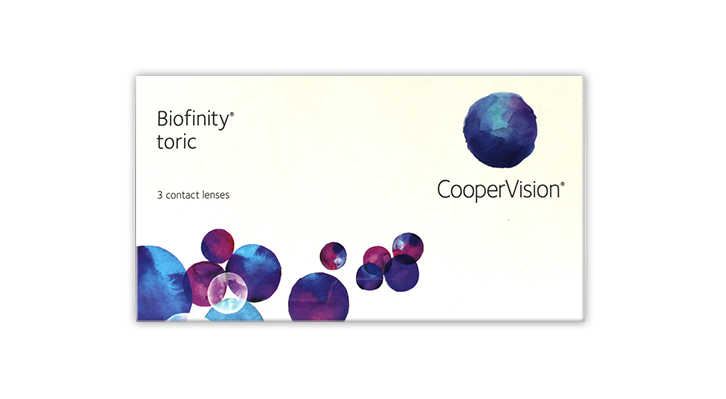
Biofinity Toric is a silicone hydrogel contact lens made by CooperVision's using their breakthrough Aquaform technology that allows greater levels of oxygen to freely flow through the contact lens to the eye.
Our customers award then a 4.8*
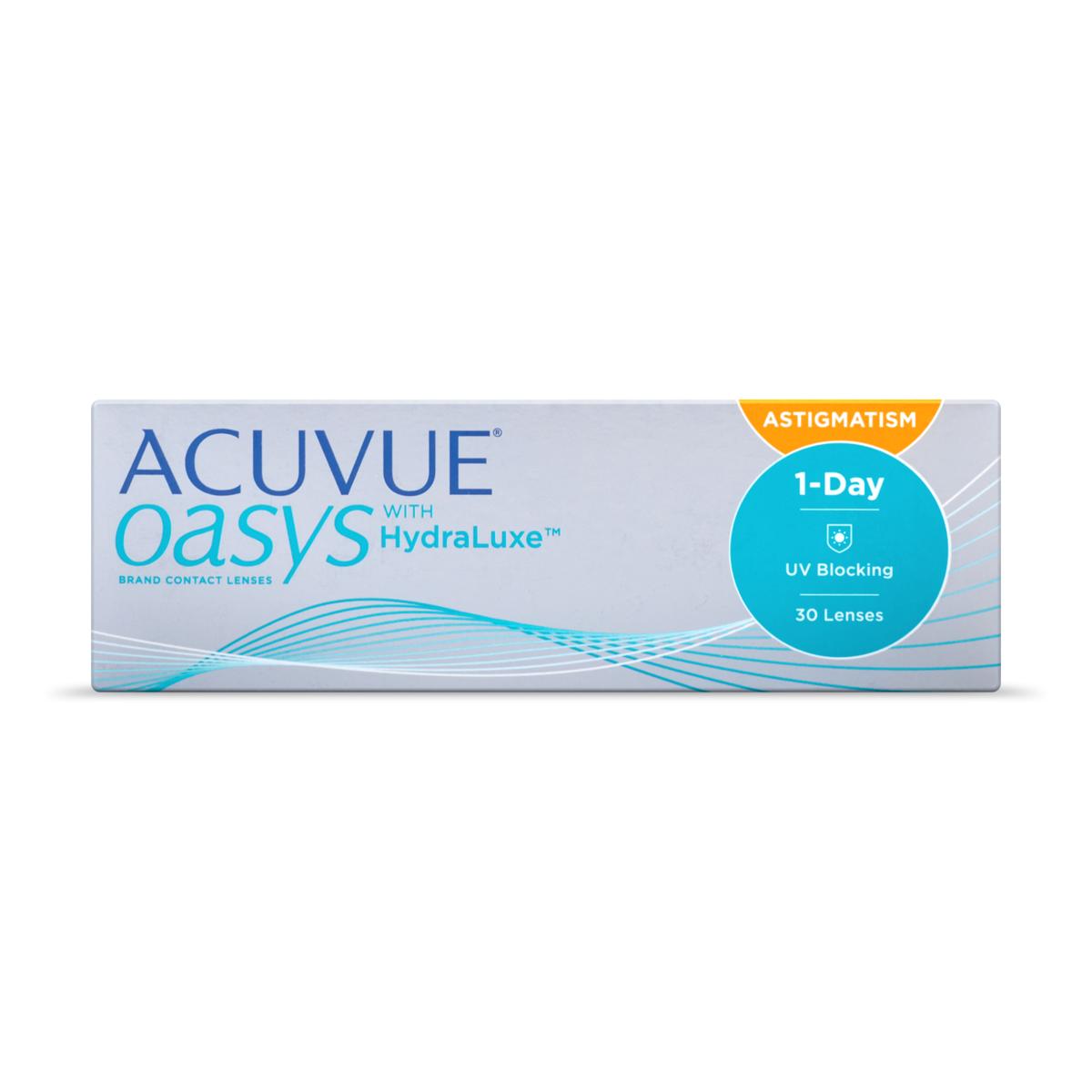
Acuvue Oasys 1 Day for astigmatism by Johnson & Johnson is a daily disposable Toric, silicone hydrogel contact lens with Hydraluxe technology to help eliminate tired eyes for contact lens wearers.
Designed to work with the eye's natural tears to help eliminate eye strain often experienced after prolonged screen usage. They included an eyelid-stabilised design to enhance the power of natural blinking to provide stabilisation.
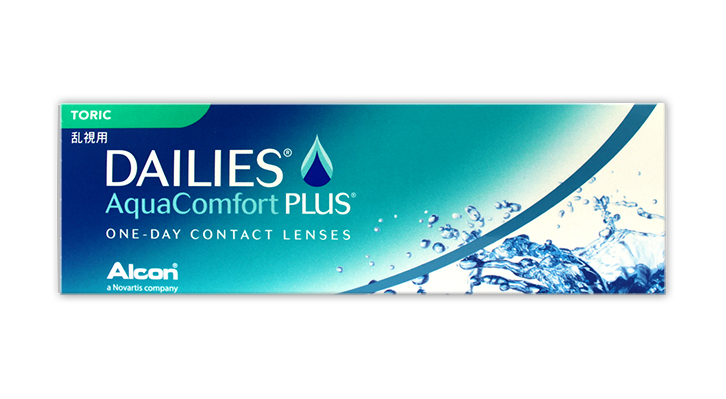
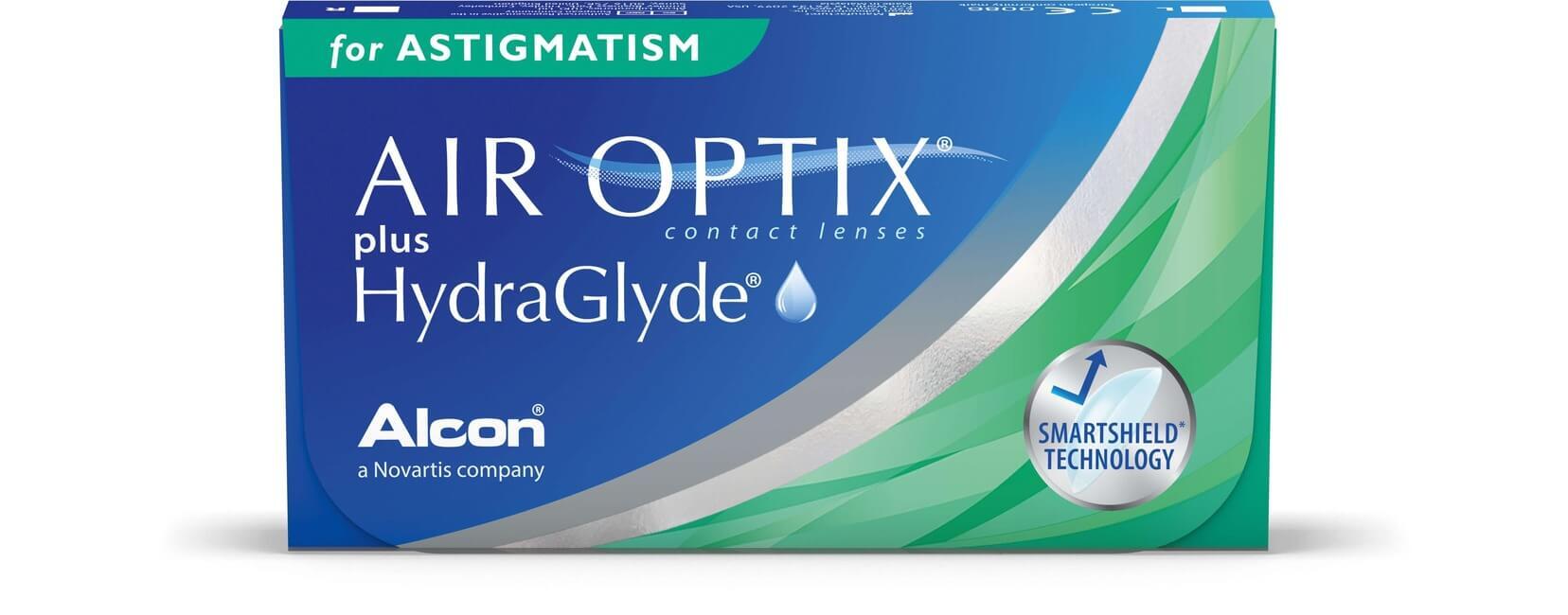
Manufactured by Alcon, using 'Lightstream Technology' for a thin, streamlined contact lenses that provide good edge comfort and crystal clear vision. In addition, the contact lenses use a blink activated moisture technology to deliver refreshing comfort all day.
Our customers award them 4.6*
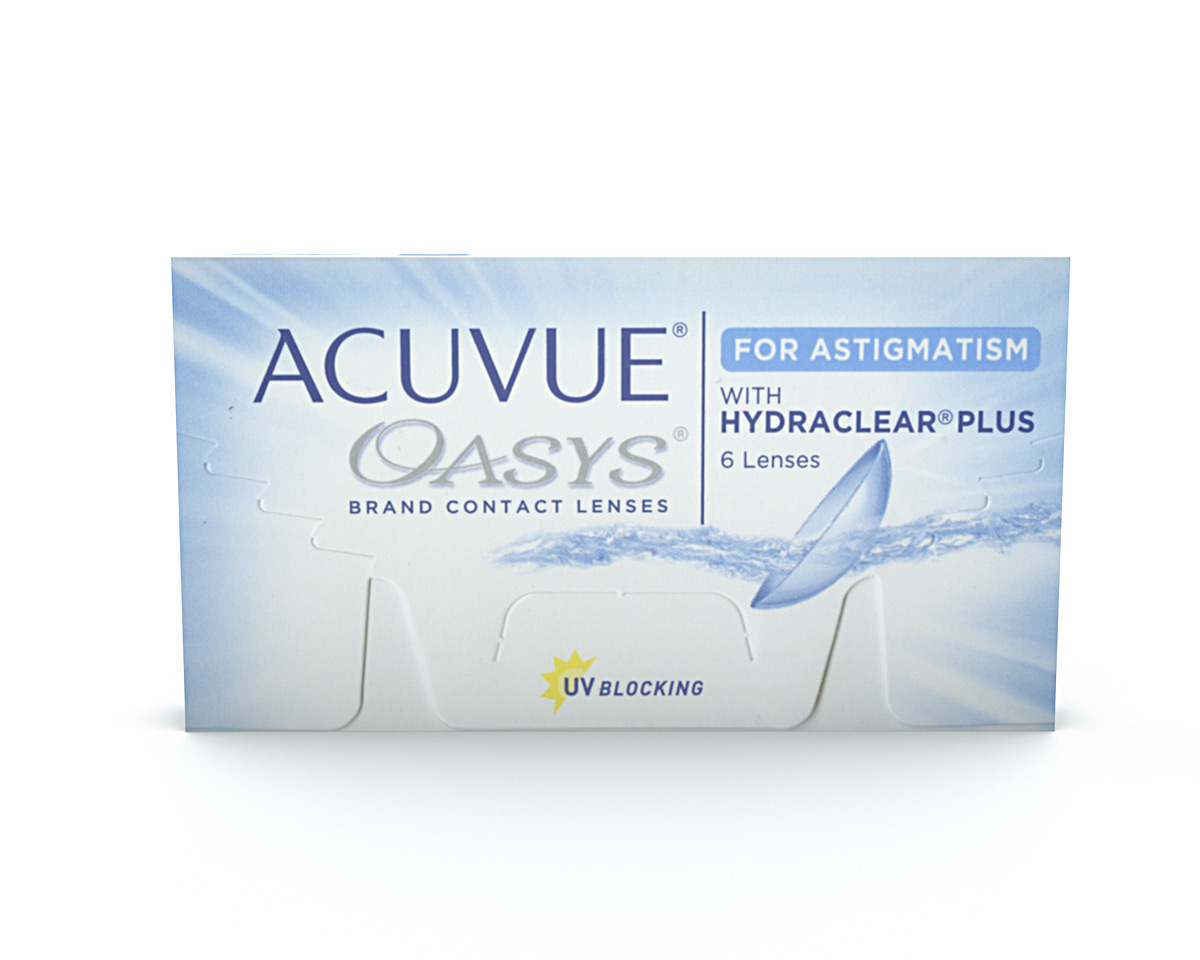
A 2 weekly Toric contact lens from Johnson & Johnson. Their BLINK STABILIZED® design helps to minimise movement of the contact lenses keeping vision clear and stable throughout the day.
An advanced silicone hydrogel contact lens that combines a new level of comfort with enhanced Oxygen capability ( Up to 5 times greater oxygen transmissibility than traditional soft contact lenses), which provides superior all day comfort in a lens that is healthy for your eyes.
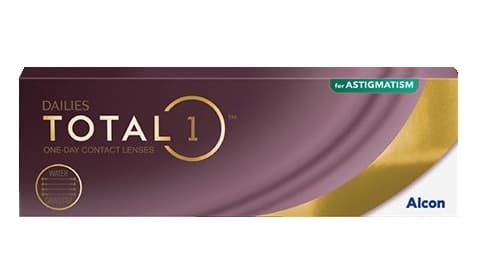
Dailies Total 1 for Astigmatism is a silicone hydrogel daily disposable contact lens, and is the world's first toric water-surface lens, creating an almost invisible barrier between the lens and your eye, plus SmarTear technology that releases phosphatidylcholine (PC) an ingredient found in natural tears, offering longer-lasting moisture and increasing comfort levels, even after 16 hours.
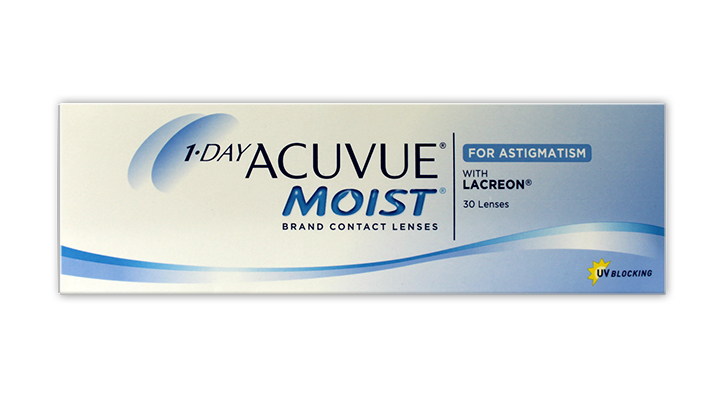
Uses Accelerated Stabilisation Design which has four point stabilisation, providing crisp stable vision throughout the day, contains Lacreon moisture technology providing blink resistant moisture retention, whilst helping reduce irritation.Our customers award them 4.8*
Toric contact lenses are slightly more costly than regular contact lenses, this is because they are complex in design, plus the fitting of toric lenses requires more expertise and takes longer, so you may find that your Optometrist charges a little more for a Toric contact lens fitting than a regular contact lens fitting.
If you have an amount of astigmatism that needs correcting with contact lenses you will find this extra expense well worth it so that you can wear contact lenses. As a comparison you can see the difference in cost with this example
1 Day Acuvue Moist retails at £24.99 whereas 1 Day Acuvue Moist for Astigmatism retails at £32.99 for 30 lenses. Assuming you need 2 boxes per month, that works out at an extra £16.00 per month for Daily disposable toric lenses.
On the monthly front, Biomedics Evolution retail at £25.20 per box of 6 and Biomedics Toric £60.90 for 6 lenses, that’s a £71.40 difference over 6 months, so just £11.90 extra per month for Toric contact lenses.
Regular contact lenses have a spherical shape not unlike a football and allows the focal power to remain the same throughout the lens, meaning they do not need to be stabalised as you will see and focus just as well if the lens rotates slightly. Toric contact lenses are Torus shaped so more like a rugby ball and have different focal points in different areas, so to correct your astigmatism and allow you to focus clearly they need to remain in place, to enable this they are commonly weighted at the bottom in such a way as to prevent rotation.The fitting of Toric contact lenses can be more difficult than regular contact lenses, the Optometrist will often trial a few different brands to see which one offers the best fit and most comfort.
Toric contact lenses do not require any special handling, so treat them as you would any other contact lens, make sure you wear them and care for them, as recommended by your Optometrist, so if you are wearing
Morning
Evening
Dispose of two weekly contact lenses after 14 days and monthly contact lenses after 30 days
Extended wear contact lenses - remember to set a reminder to remove your lenses after 30 days, or less, if recommended by your Optometrist.
| Sensitive Eyes | Dry Eyes | Active Lifestyle | Best Value | Best UV Protection |
|---|---|---|---|---|
| Biofinity Toric | Acuvue Oasys for Astigmatism | Dailies AquaComfort Plus Toric | Biofinity Toric | Acuvue Oasys for Astigmatism |
If your Optometrist has recommended Toric contact lenses then you have some degree of astigmatism.
Astigmatism remains one of the most common eye conditions Optometrist treat on a daily basis. According to a recent study carried out in the UK almost 50% of spectacle wearers had some degree of astigmatism in one or both eyes(3).
Astigmatism is when your eye or eyes are not completely spherical in shape but more Torus shaped, basically instead of being shaped similar to a football the eye of an astigmatic person is more rugby ball shaped. To find out more check out our informative guide What is Astigmatism?
If you have astigmatism, your contact lens prescription will usually include two additional measurements: CYL (Cylinder) and AXIS.
CYL (Cylinder) - shows the amount of lens power needed to correct your astigmatism. It is written as a plus (+) or minus (–) number; the further the number is from zero, the greater the amount of astigmatism being corrected.
AXIS tells the contact lens where that cylinder correction needs to be positioned. It is measured in degrees from 0 to 180 and describes the orientation of the astigmatism – it is not an indication of how strong your prescription is.
For example, a prescription might show CYL -1.25 and AXIS 90. Both measurements work together to provide the correct astigmatism correction.
When ordering toric contact lenses, always enter the CYL and AXIS exactly as they appear on your contact lens prescription.
It will depend on the contact lens.
Most Toric contact lenses are not designed to be slept in as they do not allow enough oxygen through to your eye when the eyelids are closed for extended periods, however, some Toric contact lenses have been designed to be worn overnight if recommended to do so by your Optometrist - these toric contact lenses will be made from silicone hydrogel and will be sold as extended wear or continuous wear contact lenses and can be worn for 7, 14 or 30 days continuously.
Toric contact lenses are slightly more costly than regular contact lenses, this is because they are complex in design, plus the fitting of Toric lenses requires more expertise and takes longer, beacause an astigmatic eye is much more unique, you may find that your Optometrist charges more for a Toric contact lens fitting than a regular contact lens fitting.
References
1 https://www.moorfields.nhs.uk/condition/astigmatis...
2. Hydrogel vs Silicone Hydrogel Lense Author:Dr. Russel Lazarus
Published: November 4, 2021
https://www.optometrists.org/general-practice-opto...
3. BCLA https://bcla.org.uk/Public/Consumer/Astigmatism_an...
Author: John Dreyer Optometrist Bsc(Hons), MCOPTOM, DipCLP
John qualified from Aston University in 1980, he has authored for Contactlenses.co.uk over the last 20 years, bringing his expertise to visitors to the site and providing valuable optical advice to customer questions throughout the years. He has been featured by several leading publications including The Express and ITProPortal